Introduction
Food systems are the foundation of every society. They encompass the entire journey of food — from production and processing to distribution, consumption and waste management. However, modern food systems are increasingly facing challenges such as climate change, population growth, supply chain disruptions and environmental degradation.
Recent global events have highlighted the vulnerability of food systems worldwide. Disruptions caused by extreme weather, pandemics and economic instability have demonstrated the importance of building food systems that are resilient, adaptable and sustainable.
One of the most effective approaches to strengthening food systems is sustainable agriculture.
Sustainable agriculture helps communities produce food responsibly while protecting natural resources, supporting livelihoods and ensuring long-term food security. By improving resilience at both local and national levels, sustainable agriculture plays a crucial role in building stronger food systems for the future.
What Is A Food System?
A food system includes all activities involved in getting food from farm to table.
These activities include:
- Food production
- Harvesting
- Processing
- Packaging
- Transportation
- Distribution
- Retail
- Consumption
- Waste management
Food systems connect farmers, consumers, businesses, communities and governments.
When any part of the system is disrupted, food availability and affordability can be affected.
Understanding Food System Resilience
A resilient food system can continue functioning effectively despite challenges and disruptions.
Resilient food systems are able to:
- Adapt to changing conditions
- Recover from shocks
- Maintain food availability
- Support livelihoods
- Protect environmental resources
Building resilience is increasingly important as communities face growing environmental and economic uncertainties.
Challenges Facing Modern Food Systems
Climate Change
Climate change affects agriculture through:
- Rising temperatures
- Flooding
- Droughts
- Unpredictable weather patterns
These impacts can reduce crop yields and threaten food production.
Biodiversity Loss
Declining biodiversity affects pollination, pest control and ecosystem stability.
Healthy ecosystems are essential for long-term food production.
Supply Chain Vulnerabilities
Global food systems often rely on complex supply chains.
Disruptions can affect:
- Food availability
- Prices
- Transportation
- Distribution networks
Resource Degradation
Agricultural production depends heavily on:
- Healthy soil
- Clean water
- Biodiversity
When these resources decline, food systems become more vulnerable.
How Sustainable Agriculture Builds Resilience
Diversification Of Production
Sustainable agriculture encourages diversity rather than dependence on a single crop.
Examples include:
- Crop rotation
- Intercropping
- Agroforestry
- Mixed farming systems
Diversified farms are often better able to withstand environmental and economic shocks.
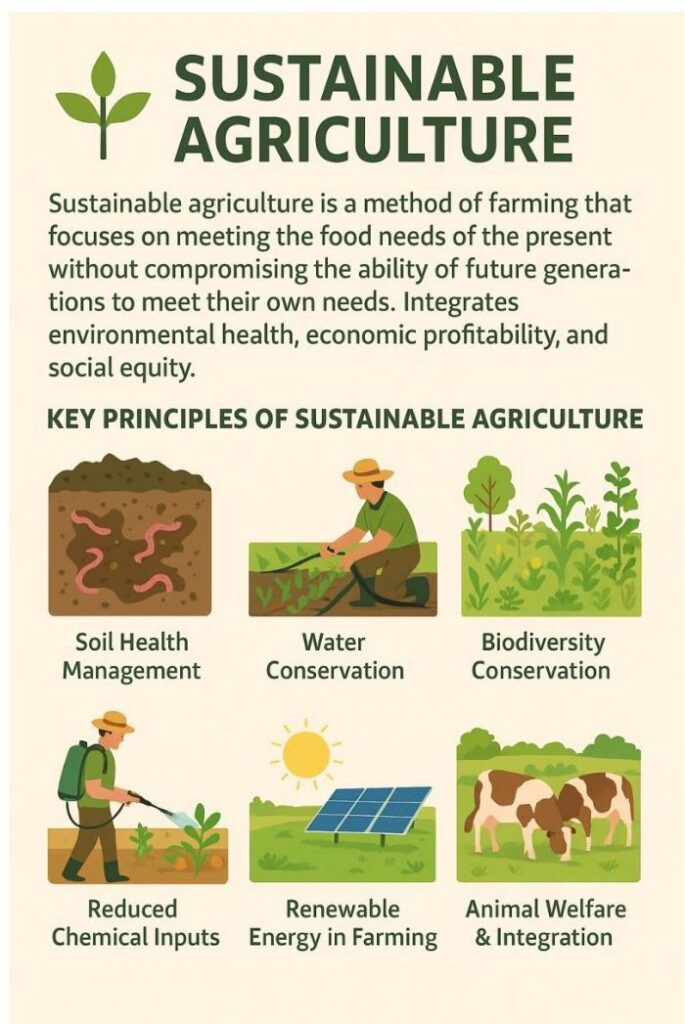
Improving Soil Health
Healthy soil is essential for resilient food production.
Sustainable practices such as:
- Composting
- Cover cropping
- Organic matter management
help improve soil fertility, water retention and long-term productivity.
Conserving Water Resources
Water shortages can severely impact food production.
Sustainable agriculture promotes:
- Rainwater harvesting
- Efficient irrigation
- Soil moisture conservation
These practices help ensure reliable water supplies during dry periods.
Supporting Biodiversity
Biodiversity strengthens ecosystem functions that support agriculture.
Benefits include:
- Natural pest control
- Pollination services
- Improved soil health
- Greater resilience to disease outbreaks
Healthy ecosystems contribute directly to food system stability.
Local Food Systems And Community Resilience
Local food production plays an important role in resilient food systems.
Community-based agriculture initiatives can:
- Reduce dependence on imports
- Increase food availability
- Support local economies
- Strengthen community participation
Examples include:
- Community gardens
- School gardens
- Urban farming projects
- Farmers’ markets
These initiatives help communities maintain food access during periods of disruption.
Sustainable Agriculture And Food Security
Food security depends on four key dimensions:
Availability
Enough food is produced.
Access
People can obtain food.
Utilisation
Food supports health and nutrition.
Stability
Food remains available over time.
Sustainable agriculture contributes to all four dimensions by creating productive and resilient farming systems.
The Malaysian Context
Malaysia faces both opportunities and challenges in strengthening food system resilience.
Factors influencing food security include:
- Climate variability
- Urbanisation
- Import dependence
- Land use pressures
Sustainable agriculture offers practical solutions that can help address these issues.
Across Malaysia, organisations such as the Malaysian Institute of Sustainable Agriculture (MISA) are supporting community-based agriculture, agroecology education and sustainable farming initiatives that contribute to more resilient food systems.
Community Participation As A Key Driver
Resilient food systems are not built by farmers alone.
Successful food systems require participation from:
- Communities
- Schools
- NGOs
- Universities
- Government agencies
- Consumers
Community engagement helps strengthen local knowledge, build partnerships and encourage sustainable food practices.
Education and awareness play essential roles in fostering long-term resilience.
Looking Toward The Future
The future of food security will depend on the ability of societies to adapt to changing environmental and economic conditions.
Sustainable agriculture provides a pathway toward:
- Stronger food systems
- Healthier ecosystems
- Improved livelihoods
- Greater climate resilience
As communities invest in sustainable practices, they increase their capacity to respond to future challenges while protecting resources for future generations.
Conclusion
Building resilient food systems is one of the most important challenges of the twenty-first century.
Sustainable agriculture offers practical solutions by improving soil health, conserving water, protecting biodiversity and strengthening local food production.
Through community participation, education and responsible resource management, sustainable agriculture helps create food systems that are productive, adaptable and resilient.
By investing in sustainable food systems today, communities can build a stronger foundation for future food security and environmental sustainability.
