Introduction
Every day, households, schools, markets and businesses generate significant amounts of organic waste. Food scraps, vegetable trimmings, fruit peels, garden waste and other biodegradable materials are often discarded and sent to landfills.
When organic waste accumulates in landfills, it contributes to environmental problems such as methane emissions, unpleasant odours and wasted resources.
However, what many people consider waste can actually become a valuable resource.
Community composting is a practical and sustainable solution that transforms organic waste into nutrient-rich compost. By converting food and garden waste into a valuable soil amendment, communities can reduce waste, improve soil health and support sustainable agriculture.
As interest in environmental sustainability grows, community composting is becoming an increasingly important component of local food systems and community development initiatives.
What Is Composting?
Composting is the natural process of breaking down organic materials into a nutrient-rich substance known as compost.
Organic materials commonly used in composting include:
- Fruit peels
- Vegetable scraps
- Coffee grounds
- Dry leaves
- Grass clippings
- Plant residues
- Agricultural waste
Microorganisms, fungi and other decomposers naturally break down these materials over time.
The result is a dark, crumbly material rich in nutrients and beneficial microorganisms.
What Is Community Composting?
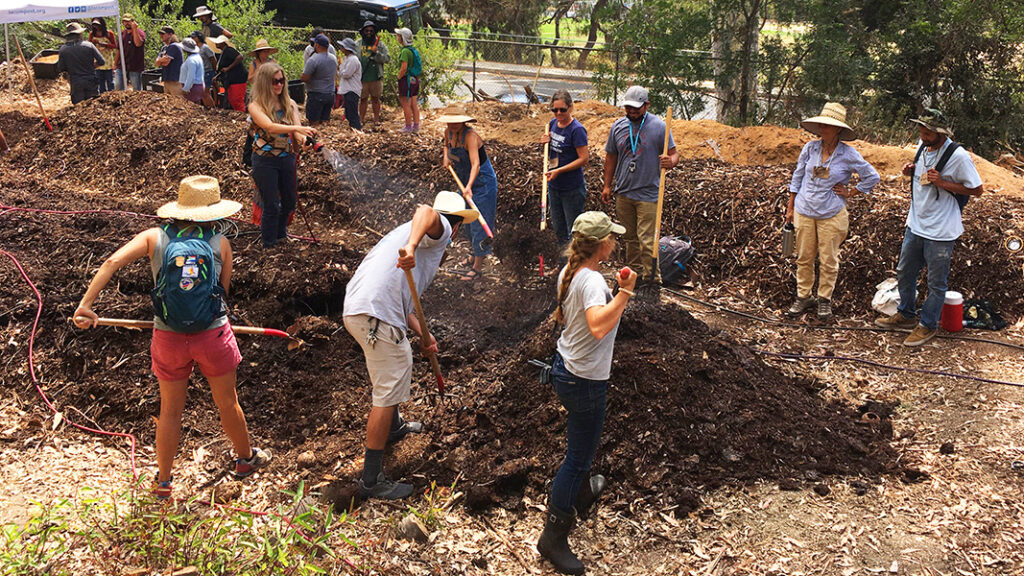
Community composting involves groups of people working together to collect and process organic waste.
Examples include:
- Neighbourhood composting sites
- School composting programmes
- Community gardens
- Urban agriculture projects
- Agricultural training centres
Rather than composting individually at home, participants collaborate to manage larger composting systems that benefit the wider community.
Reducing Organic Waste
One of the primary benefits of community composting is waste reduction.
A significant portion of household waste consists of organic materials that can be composted.
Community composting helps:
- Reduce landfill waste
- Lower waste disposal costs
- Minimise environmental impacts
- Encourage responsible consumption
By diverting organic waste from landfills, communities contribute to more sustainable waste management systems.
Supporting Sustainable Agriculture
Compost is a valuable resource for sustainable food production.
Benefits include:
- Improved soil fertility
- Enhanced soil structure
- Better moisture retention
- Increased microbial activity
Community gardens, school gardens and local farms often use compost to improve growing conditions and reduce reliance on synthetic fertilisers.
This creates a circular system where waste becomes a resource that supports food production.
Improving Soil Health
Healthy soil is the foundation of sustainable agriculture.
Compost contributes to soil health by:
- Increasing organic matter
- Supporting beneficial microorganisms
- Improving nutrient availability
- Enhancing water retention
Healthy soils produce stronger plants and more resilient agricultural systems.
For communities engaged in food production, compost provides an affordable and environmentally friendly soil amendment.
Reducing Greenhouse Gas Emissions
Organic waste decomposing in landfills produces methane, a powerful greenhouse gas.
Community composting helps reduce methane emissions by:
- Diverting waste from landfills
- Encouraging aerobic decomposition
- Supporting carbon cycling
These benefits contribute to climate change mitigation efforts and environmental sustainability.
Educational Benefits
Community composting provides valuable educational opportunities.
Participants learn about:
- Waste management
- Soil biology
- Nutrient cycling
- Sustainable agriculture
- Environmental stewardship
Schools and community organisations often use composting programmes as practical learning experiences that connect environmental concepts with real-world action.
Building Community Participation
Community composting encourages collaboration and shared responsibility.
Participants may include:
- Residents
- Students
- Volunteers
- Farmers
- Community organisations
Working together on composting projects strengthens social connections while promoting sustainability.
These shared activities help build stronger and more engaged communities.
Community Composting In Malaysia
Interest in composting continues to grow across Malaysia.
Examples include:
- School composting programmes
- Community garden projects
- Urban agriculture initiatives
- Sustainable agriculture training programmes
Organisations such as MISA promote composting as part of broader sustainable agriculture and agroecology education efforts.
These initiatives help communities understand how waste can become a valuable resource for food production and environmental management.
Challenges And Solutions
Community composting projects may face challenges such as:
Limited Awareness
Many people are unfamiliar with composting practices.
Space Constraints
Urban areas may have limited space for composting facilities.
Maintenance Requirements
Successful composting requires ongoing management and participation.
These challenges can be addressed through education, training and strong community engagement.
The Circular Economy Connection
Community composting is an excellent example of the circular economy in action.
Instead of viewing waste as a problem, composting treats organic materials as valuable resources.
This approach:
- Reduces waste
- Conserves resources
- Supports local food production
- Promotes environmental sustainability
Circular systems help create more resilient communities and sustainable food systems.
The Future Of Community Composting
As communities seek practical solutions to environmental challenges, community composting is likely to become increasingly important.
Future opportunities include:
- Expanding composting education
- Integrating composting into schools
- Supporting urban agriculture
- Strengthening local food systems
- Promoting circular economy principles
These developments can contribute to healthier communities and more sustainable environments.
Conclusion
Community composting transforms organic waste into valuable resources that support sustainable agriculture, environmental stewardship and community development.
By reducing waste, improving soil health and encouraging participation, composting projects create benefits that extend far beyond waste management.
As communities continue to embrace sustainable practices, community composting offers a simple yet powerful tool for building healthier, greener and more resilient futures.
