Introduction
Malaysia is blessed with rich biodiversity, fertile landscapes and a tropical climate that supports a wide variety of agricultural activities. Agriculture has long played an important role in the country’s economic development, food production and rural livelihoods. However, modern agricultural systems are increasingly facing challenges such as climate change, environmental degradation, rising production costs and concerns over long-term food security.
As these challenges become more apparent, there is growing interest in agricultural approaches that balance productivity with environmental sustainability. One such approach is agroecology.
Agroecology combines ecological principles, sustainable farming practices and community participation to create food systems that are productive, resilient and environmentally responsible. Around the world, agroecology is increasingly recognised as an important pathway toward sustainable food production and rural development.
In Malaysia, agroecology presents both significant opportunities and important challenges that will shape the future of sustainable agriculture.
Understanding Agroecology In The Malaysian Context
Agroecology is not simply a farming technique. It is a holistic approach that views farms as ecosystems where plants, animals, soil, water and people interact.
In Malaysia, agroecological practices can include:
- Organic farming
- Natural farming
- Agroforestry systems
- Community gardens
- School gardening programmes
- Composting initiatives
- Integrated farming systems
- Biodiversity conservation projects
These approaches aim to strengthen ecological balance while supporting food production and community well-being.
Given Malaysia’s unique environmental conditions and cultural diversity, agroecology has the potential to be adapted to various agricultural settings, from rural villages to urban communities.
Opportunities For Agroecology In Malaysia
1. Rich Biodiversity
Malaysia is recognised as one of the world’s biodiversity hotspots.
The country is home to:
- Diverse plant species
- Tropical rainforests
- Beneficial insects
- Pollinators
- Wildlife ecosystems
Agroecology encourages the conservation and integration of biodiversity into farming systems.
Through practices such as agroforestry, mixed cropping and habitat protection, farmers can benefit from ecosystem services while supporting conservation efforts.
2. Growing Interest In Sustainable Agriculture
Consumers are becoming increasingly aware of food quality, environmental sustainability and health concerns.
This growing awareness creates opportunities for:
- Sustainable food production
- Local food systems
- Organic products
- Community-supported agriculture
- Environmentally responsible farming
As demand for sustainable food increases, agroecological producers may benefit from expanding market opportunities.
3. Strengthening Food Security
Food security remains a key national concern.
Global supply chain disruptions, climate events and economic uncertainty have highlighted the importance of local food production.
Agroecology can strengthen food security by:
- Diversifying food production
- Reducing dependence on imported inputs
- Supporting local food systems
- Increasing resilience to external shocks
Community gardens, urban agriculture projects and local farming initiatives can contribute significantly to food availability and accessibility.
4. Community Development Opportunities
Agroecology places strong emphasis on community participation and knowledge sharing.
Many agroecological projects create opportunities for:
- Youth engagement
- Volunteer participation
- Educational programmes
- Community empowerment
- Social cohesion
These initiatives strengthen relationships between people, food systems and the environment.
Organisations such as the Malaysian Institute of Sustainable Agriculture (MISA) have demonstrated how agroecological programmes can support community development through practical education and hands-on learning.
5. Climate Change Adaptation
Malaysia is increasingly experiencing climate-related challenges such as:
- Flooding
- Extreme rainfall
- Drought periods
- Rising temperatures
Agroecological systems often demonstrate greater resilience because they promote:
- Healthy soils
- Water conservation
- Biodiversity
- Crop diversification
These characteristics help farming systems adapt to changing environmental conditions.
Challenges Facing Agroecology In Malaysia
Despite its potential, agroecology faces several obstacles that must be addressed for wider adoption.
1. Limited Public Awareness
Many people remain unfamiliar with the concept of agroecology.
While sustainable agriculture is becoming more widely discussed, awareness of agroecological principles and benefits remains relatively limited.
Public education and outreach are essential to increase understanding and encourage participation.
2. Knowledge And Training Gaps
Transitioning to agroecological systems often requires new skills and knowledge.
Farmers may need training in areas such as:
- Composting
- Soil management
- Natural pest control
- Agroforestry
- Biodiversity conservation
Expanding access to education and practical training programmes is critical for successful implementation.
3. Economic Transition Challenges
Farmers transitioning from conventional systems may face short-term challenges, including:
- Learning new practices
- Adjusting production methods
- Initial investment requirements
- Market uncertainties
Support mechanisms and capacity-building programmes can help reduce these barriers.
4. Policy And Institutional Support
The success of agroecology depends on supportive policies and institutional frameworks.
Greater collaboration between:
- Government agencies
- Educational institutions
- NGOs
- Researchers
- Community organisations
can help strengthen agroecological development throughout Malaysia.
5. Market Development
Although demand for sustainable products is increasing, market structures for agroecological products are still developing.
Challenges include:
- Consumer awareness
- Certification systems
- Distribution networks
- Market access
Building stronger local food systems can help address these issues.
The Role Of Education And Community Engagement
Education is one of the most important drivers of agroecological development.
Schools, universities, NGOs and community organisations play a crucial role in:
- Raising awareness
- Building skills
- Sharing knowledge
- Demonstrating practical solutions
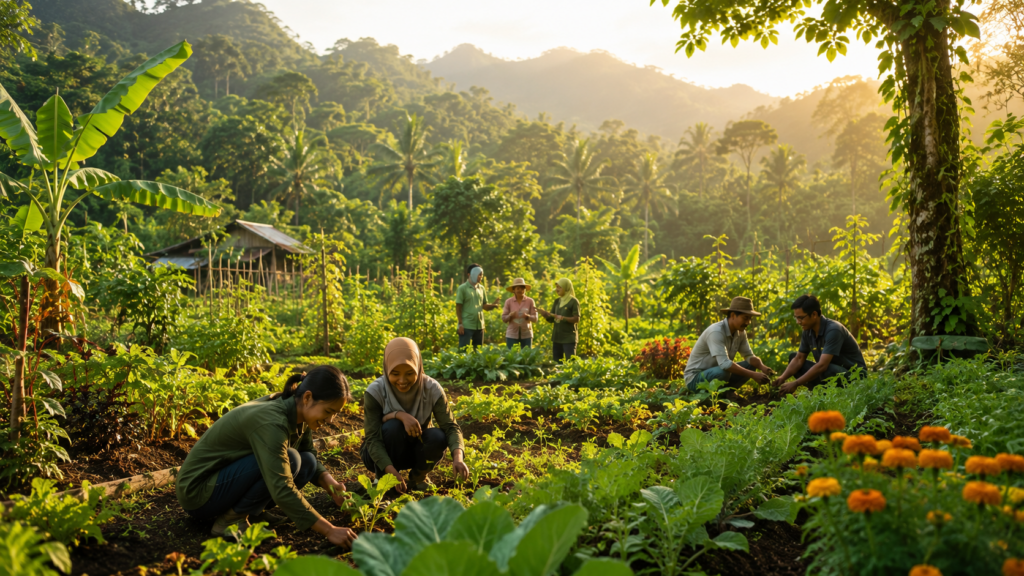
School gardens, community gardens and demonstration farms provide valuable opportunities for experiential learning.
These initiatives help people understand how sustainable food systems function while encouraging environmental stewardship.
The Future Of Agroecology In Malaysia
The future of agroecology in Malaysia appears promising.
Several factors support continued growth:
- Rising environmental awareness
- Increased interest in sustainable food systems
- Growing community participation
- Expansion of educational programmes
- Greater focus on climate resilience
As more communities, institutions and organisations embrace sustainable agriculture practices, agroecology can become an increasingly important component of Malaysia’s agricultural landscape.
By integrating ecological science, traditional knowledge and community participation, agroecology offers a pathway toward more resilient and sustainable food systems.
Conclusion
Agroecology presents significant opportunities for Malaysia to strengthen food security, protect biodiversity, support communities and build resilience against climate change.
While challenges such as awareness, training, policy support and market development remain, the growing interest in sustainable agriculture provides a strong foundation for future progress.
Through collaboration, education and practical action, agroecology can help create agricultural systems that benefit people, communities and the environment for generations to come.
As Malaysia continues its journey toward sustainability, agroecology has the potential to play a transformative role in shaping a healthier and more resilient future.
